An IoT system for embodied, ritual plant care
Plant care you can feel, not just read.
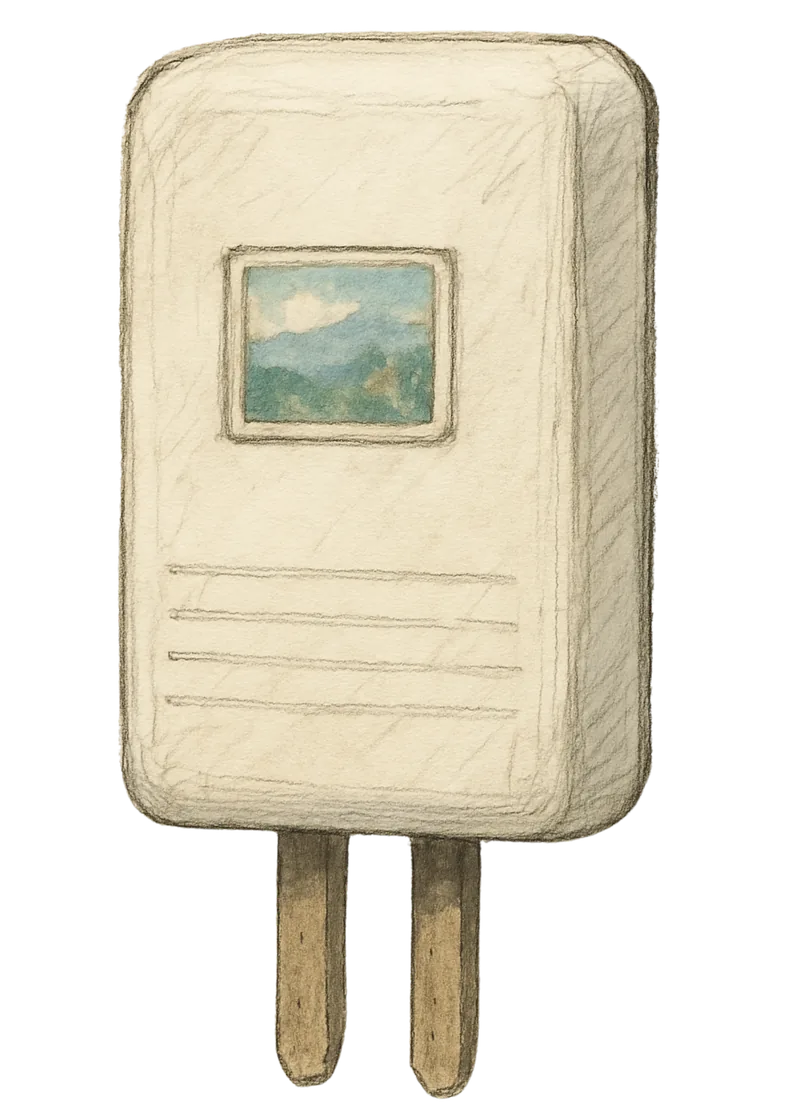
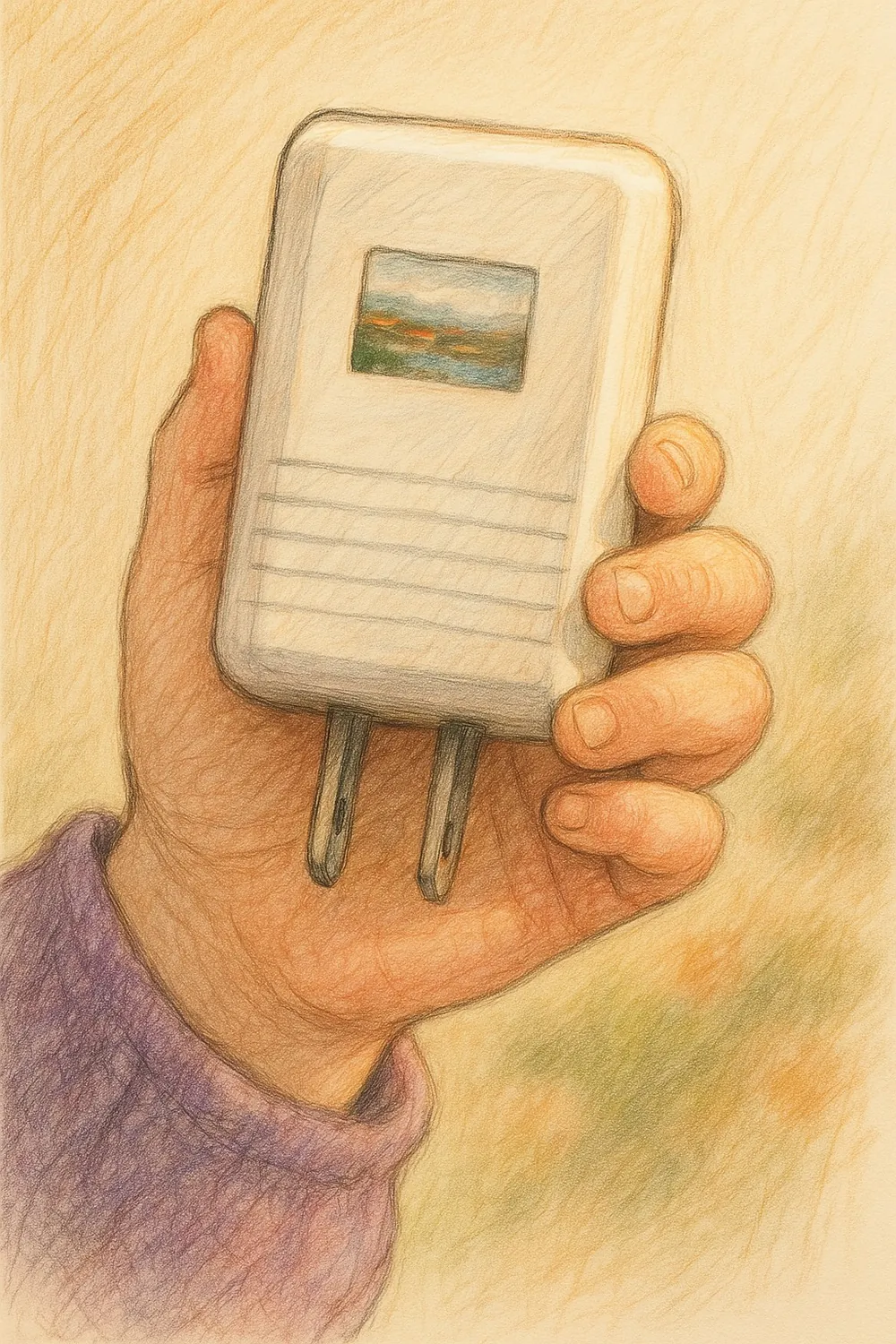
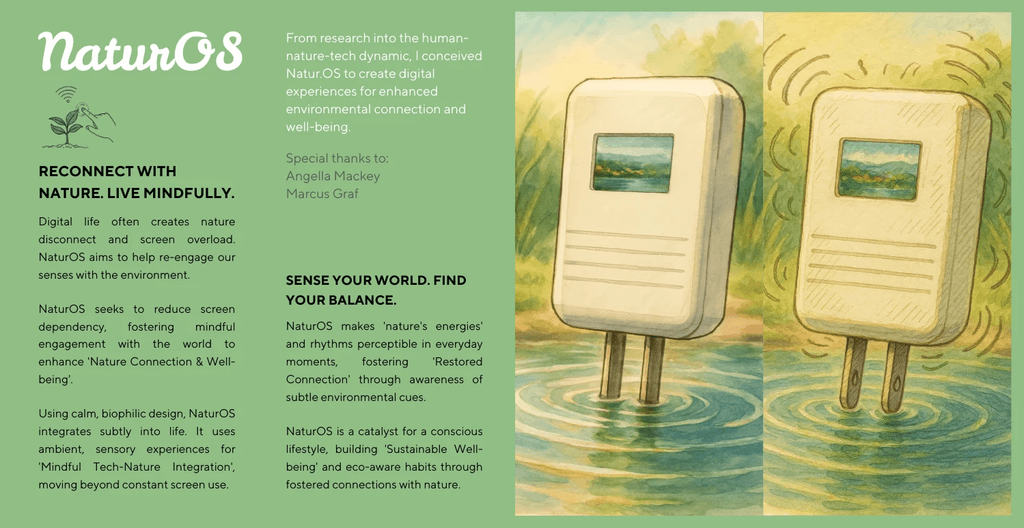
NaturOS is a small device that lives in your plant's pot and a web platform that goes with it. It senses soil, light and temperature, and tells you what your plant needs through touch, sound and light instead of another wall of numbers.
- Soil moisture
- Light & solar
- Temperature
- Haptic pulse
- Sound cues
The story
From energy awareness to embodied connection
NaturOS started with a broader question: can technology make us feel more connected to the world around us? A first experiment turned solar energy into something you could see and hear.
It taught an important lesson. When the experience was only data, people treated it as a transaction. They checked it, then forgot it. So the project turned to plants: living things that already invite care, patience and touch.
“How might we design IoT systems that help people build deeper, emotionally resonant relationships with their plants, moving beyond automation into embodied, ritual care?”
The problem
Smart plant tools mostly make care feel like admin
Most IoT plant sensors turn the relationship into monitoring. Research and interviews pointed to three reasons people stop using them.
Engagement fatigue
People abandon smart devices that feel purely functional. Another app with another notification is easy to ignore.
Over-datafication
A moisture reading of 31% means little to most people. Raw sensor data without context pushes non-technical users away.
Disconnection
Dashboards pull plant care onto a screen, away from the soil, the leaves and the light where it actually happens.
How it works
Sense, interpret, speak
NaturOS treats a plant's needs as signals to be felt, not figures to be checked. One loop runs quietly in the pot.
Sense
Probes in the soil read moisture, an infrared sensor reads temperature and a small solar cell reads the light the plant is getting.
Interpret
Readings are compared with what that species needs, so NaturOS knows the difference between a thirsty fern and a cactus that is fine.
Speak
Instead of a number, the device answers with a gentle vibration, a short sound or a change in its little landscape screen. You feel it before you read it.
Features
What NaturOS does
The device handles the moment-to-moment care. The web platform keeps the longer story.
Water levels you can feel
Touch the device and it pulses softly when the soil is dry. No pop-up needed.
Feedback through sound and haptics
Each need has its own short, calm cue, so care works without looking at a screen. Visual, sonic and haptic channels make it usable for more people.
Listen to the solar energy
The solar cell turns sunlight into sound. Bright windowsills hum; dim corners go quiet.
Auto-journaling
Watering, light and temperature are logged over time, so you can see how a plant responds to your care.
See the dashboard : Auto-journalingIdentify from a photo
Not sure what you brought home? Photograph a leaf or flower and get likely species with a confidence score.
How it works : Identify from a photoPlant library
Care basics for common houseplants and herbs: light, water, temperature and whether they are safe around pets.
Browse plants : Plant library
Hardware
What's inside
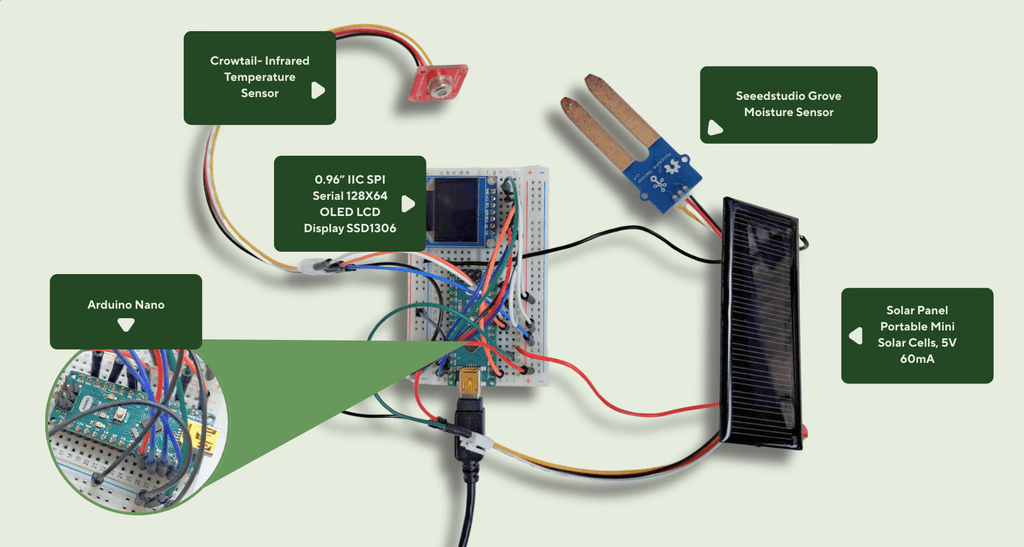
Off-the-shelf, low-power parts, chosen so the device can be rebuilt and repaired.
- Microcontroller
- Arduino Nano for the prototype; ESP32 for the connected version
- Soil moisture
- Seeed Studio Grove capacitive moisture sensor
- Temperature
- Crowtail infrared temperature sensor
- Light & power
- Mini 5 V / 60 mA solar panel, also used as a light sensor
- Display
- 0.96″ 128×64 SSD1306 OLED showing a small landscape
- Feedback
- Vibration motor and a piezo sound module
- Enclosure
- 3D-printed shell, modelled in Tinkercad (see the model below)
Loading the 3D model…
The enclosure
Turn it around
The shell was modelled in Tinkercad and 3D printed. It holds the electronics in a soft, upright body with a window for the screen, five slots that let sound out, and two flat probes that reach into the soil. It's small enough to sit in a pot without taking over.
- Width
- 46 mm
- Depth
- 34 mm
- Height
- 134 mm
Height includes the probes.
Download the STL (1.1 MB)Process
Three weeks of research through design
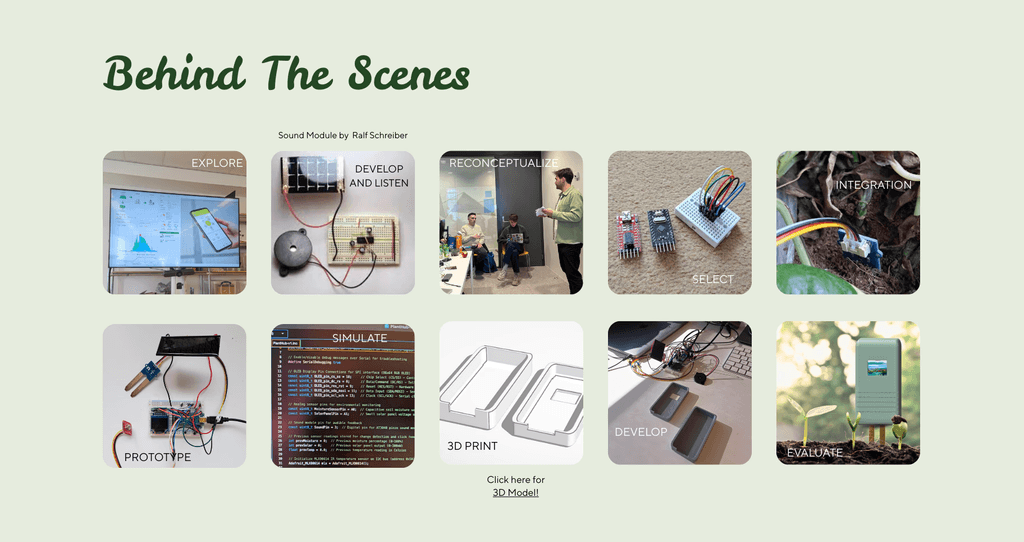
Explore, listen, reconceptualise, prototype, print, test, repeat. Each round put a physical thing in front of people as early as possible.
- Phase 1
Research
A literature review on biophilic interaction design, plus interviews with plant owners about why they keep, forget and lose plants.
- Phase 2
Prototyping
Breadboard first, then a soldered build with sensors, OLED, haptics and sound, housed in a 3D-printed shell.
- Phase 3
Software
A React and Next.js dashboard, with plant identification through the Pl@ntNet API and early image classifiers trained in Teachable Machine.
- Phase 4
Testing
Iterative sessions with users tuned the strength of the vibration, the choice of sounds and how much the dashboard should say.
Tools used
- Arduino IDE
- ESP32
- Tinkercad
- Spline
- Teachable Machine
- Hugging Face
- Pl@ntNet API
- Next.js
- React
- Vercel
- GitHub
- Cursor
Values
Ethics and accessibility
Technology that sits in someone's home, and next to something they care for, has to earn its place.
An aid, not a replacement
NaturOS nudges you to look at your plant, not away from it. It is designed so people keep, and grow, their own observational skills.
Care with data
Plant photos are sent only to identify them and are not stored by this site. Sensor data and images are never repurposed without consent.
More than one way in
Every message is available as touch, sound and visuals, so the system works for people with low vision, hearing loss or screen fatigue.
Sustainable by design
A small solar cell, low-power parts and a repairable printed case. Built to last, and to make energy use something you can hear.
Next, NaturOS could grow beyond the windowsill: shared devices for community gardens, and plant stories passed between neighbours.
Interested in calmer, more caring technology?
If you work on interaction design, plant science or tech for nature connection, I'd love to hear from you.